-
Gujarat, India
- info@icontechnology.in
- 24/7 Customer Support
Gujarat, India
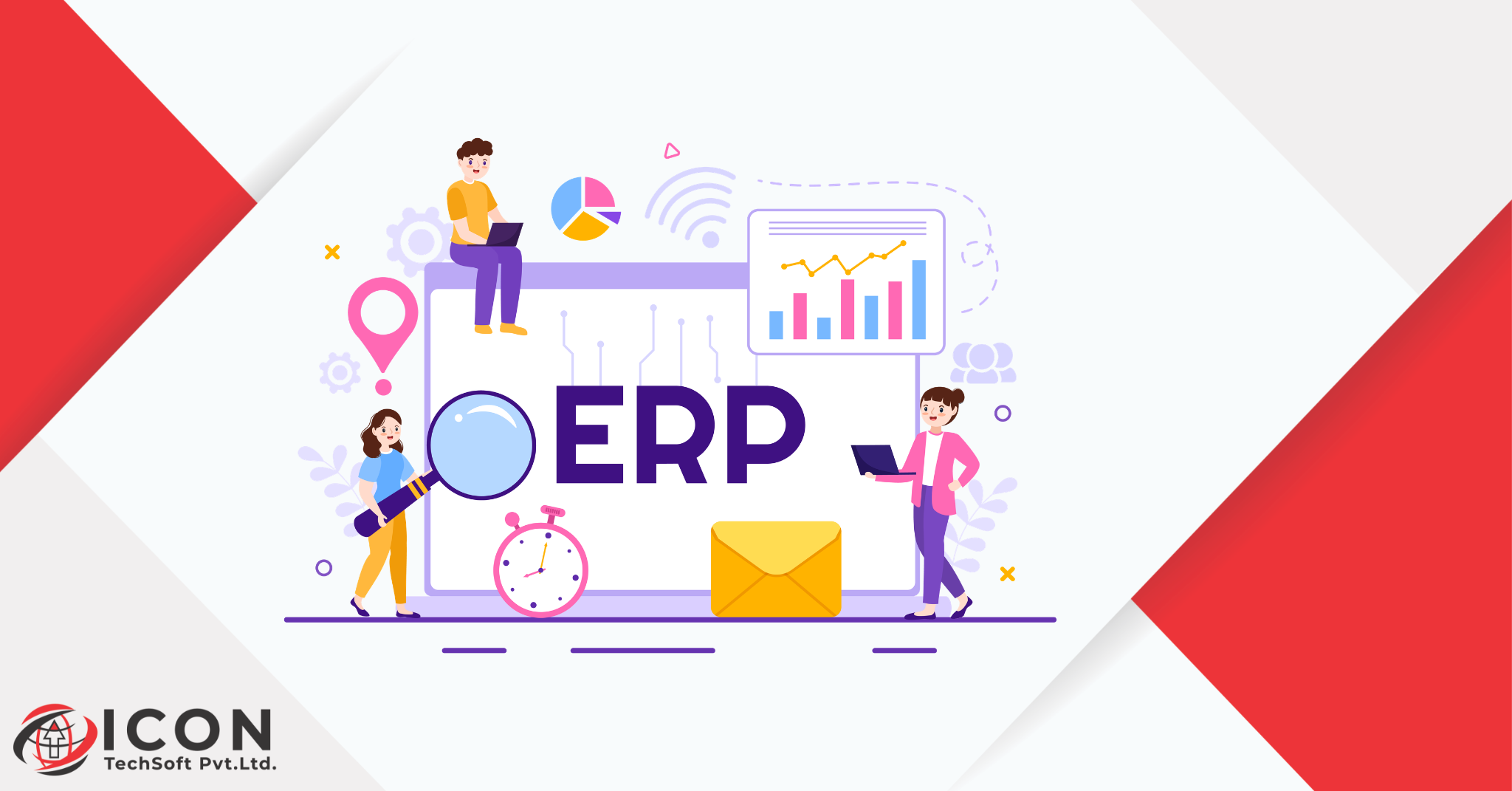
Welcome to the future of business management! In 2026, Odoo ERP is at the forefront of digital transformation, helping companies streamline their operations like never before. But what exactly is Odoo ERP? It’s a comprehensive, open-source enterprise resource planning (ERP) platform that integrates essential business functions such as sales, inventory management, accounting, human resources, manufacturing, and Customer relationship management (CRM) into a single, unified system. Unlike traditional software that requires multiple disjointed applications, Odoo ERP acts as a central hub, ensuring all your data is synchronized and accessible in real-time.
Why is an ERP solution essential for modern businesses? Imagine running a company where sales teams don’t know inventory levels, accountants chase paper trails for invoices, and managers make decisions based on outdated spreadsheets. These are common pain points in growing businesses. An effective ERP solution eliminates silos, automates routine tasks, provides actionable insights through dashboards, and scales with your business. According to recent industry reports, businesses using ERP systems see up to 20% higher productivity and 15% lower operational costs.
Now, let’s talk about how Odoo ERP is evolving in 2026. With advancements in artificial intelligence (AI), cloud computing, and mobile technology, Odoo software has become more intuitive, powerful, and accessible. It’s no longer just for large enterprises; it’s the go-to ERP for small business owners who want enterprise-level features without the hefty price tag. This blog dives deep into the top Odoo ERP trends in 2026 that every business owner must know. Whether you’re a startup founder or a seasoned executive, these trends will help you future-proof your operations and gain a competitive edge. Stick around as we break down each trend with practical examples, benefits, and tips for implementation.
The shift to Odoo ERP is happening at an unprecedented pace, driven by the rising demand for ERP solutions that are agile, cost-effective, and feature-rich. In 2025 alone, Odoo reported a 40% increase in new implementations, and experts predict this growth will accelerate in 2026. Businesses are ditching legacy systems like outdated on-premise software because they can’t keep up with today’s digital demands.
Let’s explore the benefits of using Odoo software in detail:
Why is Odoo becoming a top ERP system? Its modular design means you pay only for what you use, making it an ideal ERP solution for businesses of all sizes. For instance, a small retailer can start with sales and inventory modules, then add accounting as revenue grows. Real-world success stories abound- A mid-sized manufacturer in Europe switched to Odoo ERP and reduced inventory costs by 30% within six months. Another U.S.-based service firm automated its quoting process, boosting win rates by 25%.
Moreover, in an era of economic uncertainty, Odoo’s subscription model (starting at $24 per user per month for enterprise) offers predictability. Small businesses love it as the best ERP for small business because it levels the playing field against giants. If you’re still on spreadsheets or fragmented tools, switching to Odoo ERP could be your smartest move in 2026.
AI-powered automation is the hottest trend in Odoo ERP for 2026, turning static software into intelligent partners. Odoo has integrated advanced AI capabilities, making workflows smarter and more predictive.
Smarter workflows with AI include natural language processing for report generation-just type “show sales by region” and get instant visuals. Predictive maintenance in manufacturing modules uses AI to forecast equipment failures based on historical data, preventing downtime.
Reduced manual work is transformative. AI automates data entry via optical character recognition (OCR) for invoices, approves expenses with smart rules, and even generates personalized email campaigns. Businesses report up to 50% time savings on admin tasks.
Real-world use cases:
For ERP for small business, this means owners can focus on strategy, not minutiae. Odoo software’s AI is user-friendly-no data scientists needed. As a top ERP system, it’s setting the benchmark for automation in 2026.
Cloud-based ERP solutions are exploding in popularity, with Odoo ERP leading as a fully hosted option. In 2026, over 80% of new ERP deployments will be cloud-native, per Gartner forecasts.
Flexibility and remote access shine here. Access your Odoo ERP dashboard from any device, anywhere. During global disruptions like pandemics, cloud users thrived while on-premise setups struggled.
Cost-effective ERP solution for businesses- Eliminate hardware costs (up to $100K savings), automatic updates, and pay-per-use scaling. Odoo’s cloud hosting starts at low tiers, perfect for startups.
Why cloud ERP is dominating:
Case study: A small eCommerce business migrated to Odoo ERP cloud and saw 35% faster order processing with global team access. For those seeking the best ERP for small business, cloud Odoo is unbeatable.
The mobile-first Odoo experience is revolutionizing how owners manage business on the go. In 2026, Odoo’s apps for iOS and Android offer near-desktop parity.
Mobile apps and dashboards include push notifications for approvals, barcode scanning for inventory, and voice-to-text notes. Customize widgets for KPIs like daily sales or overdue tasks.
Benefits for business owners:
A logistics firm used mobile Odoo ERP to track 500+ drivers daily, reducing delays by 28%. As an ERP solution, this trend makes Odoo software essential for agile teams and ERP for small business mobility.
Fully customizable Odoo software allows tailoring ERP for different industries effortlessly. With a low-code studio, non-tech users build apps.
Tailored ERP for different industries: Real estate gets property management, education handles enrollments.
Easy module integration: Drag-and-drop 30,000+ apps from the Odoo App Store.
Scalable solutions for growing businesses:
A healthcare clinic customized patient portals, improving satisfaction by 45%. Odoo ERP’s flexibility cements it as the top ERP system and best ERP for small business.
Seamless integration is key in 2026’s connected world. Odoo ERP connects effortlessly with third-party tools.
Connecting CRM, eCommerce, and marketing tools: Sync Shopify orders to inventory, HubSpot leads to sales pipelines.
API-based integrations: RESTful APIs enable custom connectors; Zapier support for 5,000+ apps.
Improving business efficiency:
Example: A marketing agency integrated Google Ads, Facebook, and Odoo CRM, lifting conversion rates 22%. This makes Odoo a premier ERP solution.
Enhanced data security and compliance in ERP address rising cyber threats.
Importance of data protection: Breaches cost $4.5M on average; secure ERP prevents this.
Security updates in ERP: End-to-end encryption, biometric logins, AI anomaly detection.
Compliance with global standards: GDPR auto-consent tools, SOC 2 certification, HIPAA modules.
Features include:
A finance firm using Odoo ERP passed audits flawlessly. As a top ERP system, security builds trust.
ERP for small business growth is booming, with Odoo ERP tailored for it.
Why small businesses are adopting ERP: Handle 2x growth without chaos.
Affordable ERP solutions: Free core, $0-500/month scaling.
How Odoo fits small business needs:
Success: A bakery chain grew from 3 to 20 stores using Odoo ERP, managing multi-location inventory seamlessly. It’s the best ERP for small business.
Industry-specific ERP solutions make Odoo versatile.
Customized ERP for retail (POS), manufacturing (MRP), healthcare (EHR).
Benefits of niche ERP systems:
Faster implementation: Wizards guide setup.
Retail example: Dynamic pricing and loyalty programs boosted sales 18%. Odoo shines as a top ERP system.
How to choose the best ERP for your business? Follow these steps.
Key factors to consider:
Mistakes to avoid:
Why Odoo ERP stands out: Balances all factors as an ERP solution for ERP for small business.
The future of ERP beyond 2026 is exciting.
Upcoming innovations: Metaverse collaboration, quantum-secure encryption, advanced IoT for real-time tracking.
Role of automation and AI: Generative AI for custom reports, autonomous supply chains.
What businesses should prepare for:
Odoo software will dominate as the top ERP system.
To recap, the top ERP trends in 2026-AI automation, cloud solutions, mobile access, customization, integrations, security, small business support, and industry specifics-position it as the ultimate ERP solution. Odoo software empowers businesses to thrive.
Final thoughts for business owners: Don’t wait for competitors to leap ahead. Audit your current setup, request an ERP demo, and start small. Now is the right time to invest in ERP for sustainable growth.
What is Odoo ERP used for?
Odoo ERP is used for integrating and automating business processes like sales, finance, inventory, and more into one platform.
Is Odoo ERP good for small businesses?
Yes, Odoo ERP is excellent for small businesses as the best ERP for small business, offering free starts and scalable features.
How long does ERP implementation take?
ERP implementation with Odoo takes 4-12 weeks, faster for small setups.