-
Gujarat, India
- info@icontechnology.in
- 24/7 Customer Support
Gujarat, India
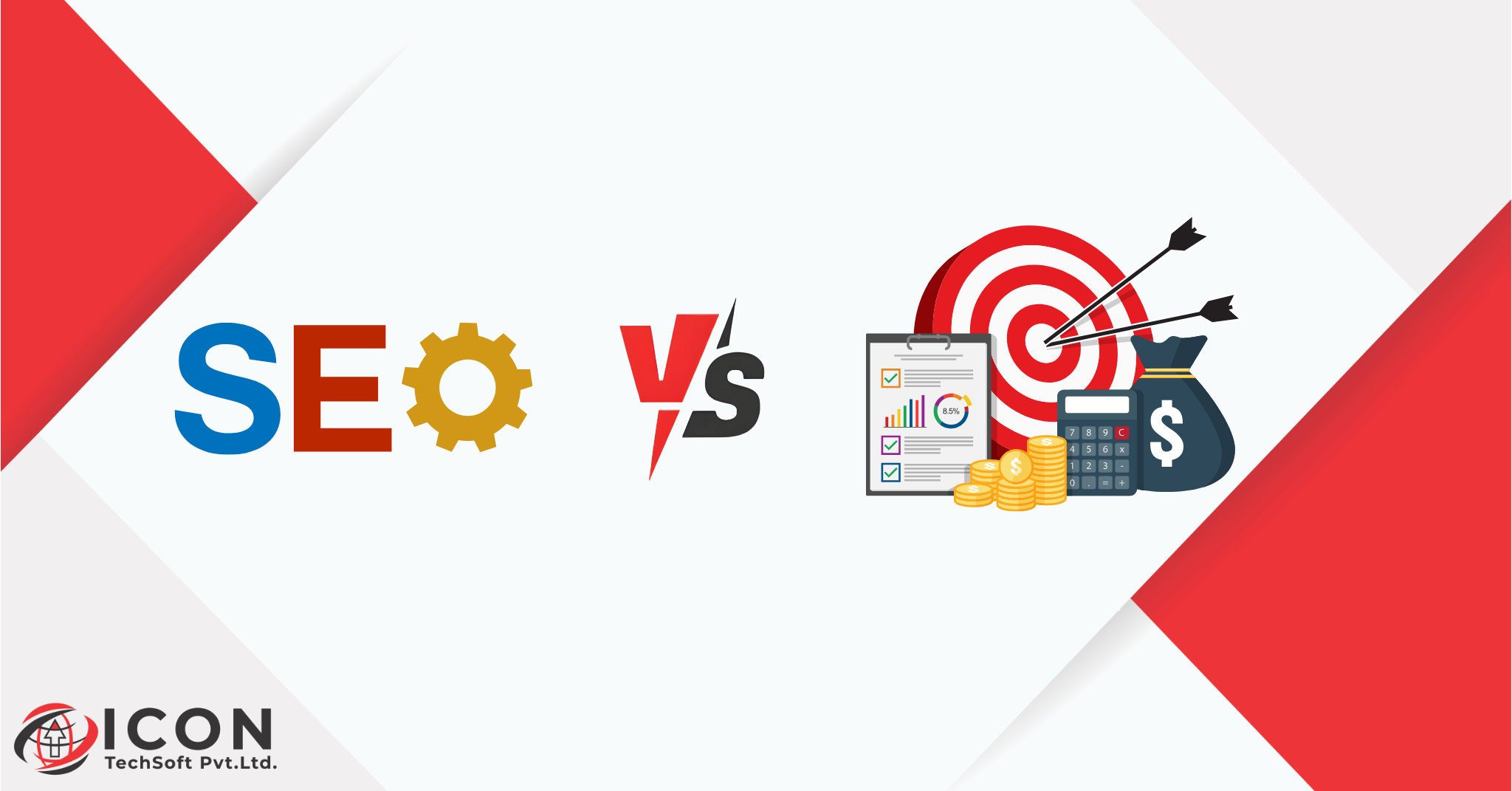
In the world of online marketing, businesses are always looking for ways to attract more customers and grow their online presence. Two key strategies that often come up are SEO and performance marketing. But what exactly are they, and how do they differ? This blog will break down SEO vs performance marketing, explaining what each one is, how they work, and why understanding both can help your business succeed in digital marketing.
First, let’s talk about what is SEO. SEO stands for Search Engine Optimization, which is a way to make your website show up higher in search results on Google or other search engines. It’s like making your site more visible to people searching for things online. On the other hand, performance marketing is a type of online marketing where you pay for results, like clicks or sales, rather than just hoping people find you.
Why do modern businesses need to understand both SEO and performance marketing? Because they complement each other. SEO builds long-term trust and organic traffic, while performance marketing gives quick boosts for sales or leads. Together, they create a strong strategy for seo and digital marketing. In this post, we’ll explore how seo performance marketing can work as a team to drive better results.
By the end, you’ll know when to use SEO, when to choose performance marketing, and how to combine them for the best outcomes. Whether you’re running an e-commerce store or a service business, this guide will help you decide the right approach. Let’s dive in and learn more about seo performance marketing.
SEO, or Search Engine Optimization, is a key part of digital marketing that helps websites rank higher in search engine results. But what is SEO in simple terms? It’s the process of improving your website so that search engines like Google can easily find and display it when people search for related topics. For example, if someone searches for “best running shoes,” SEO helps your shoe store’s page appear at the top.
How does SEO work? Search engines use algorithms to decide which pages are most relevant. SEO involves making changes to your site to match what these algorithms look for. This includes using the right keywords, creating quality content, and ensuring your site loads fast. It’s not about tricking the system, it’s about making your site helpful for users.
There are different types of SEO. On-page SEO focuses on things you can control on your website, like adding keywords to titles and descriptions. Off-page SEO is about building links from other sites to yours, which shows trust. Technical SEO deals with behind-the-scenes stuff, like making sure your site is mobile-friendly and secure.
SEO ranking factors include things like keyword relevance, site speed, user experience, and backlinks. Real-world example:- A local bakery uses SEO by optimizing their site for “fresh bread near me.” They add photos, reviews, and local keywords, which helps them appear in searches and attract more customers without paying for ads.
In summary, SEO is a long-term strategy in online marketing that builds organic traffic. It’s essential for businesses wanting steady growth through seo and digital marketing.
Performance marketing is a results-driven approach in digital marketing where you only pay for outcomes, not just impressions. What is performance marketing? It’s a way to advertise online where businesses pay based on actions like clicks, leads, or sales. Unlike traditional ads, it’s all about measurable results.
How does performance marketing work? You set up campaigns on platforms like Google or Facebook, and you pay only when someone takes a desired action. For instance, if you’re selling software, you might pay per click (CPC) when someone clicks your ad and visits your site.
Types of performance marketing include Google Ads for search results, Meta Ads (Facebook/Instagram) for social media, display ads on websites, affiliate marketing where partners promote your product, and remarketing to bring back past visitors. Businesses pay based on models like CPC (cost per click), CPL (cost per lead), or CPA (cost per acquisition).
A real example:- A clothing brand runs a Meta Ads campaign for a new dress line. They pay only when someone clicks the ad and buys the dress. This helps them track exactly how much they spend per sale, making performance marketing companies a go-to for quick wins.
In essence, performance marketing is fast and flexible, perfect for businesses in online marketing who need immediate results.
SEO and performance marketing are both important in digital marketing, but they differ in many ways. Let’s look at the main differences between seo performance marketing.
Time to see results:- SEO takes months to show effects because it builds organic rankings slowly. Performance marketing gives instant results, like traffic from ads right away.
Cost structure:- SEO has upfront costs for content and tools, but no ongoing ad spend. Performance marketing involves paying per action, which can add up quickly.
Scalability:- SEO scales with content creation, but it’s hard to control. Performance marketing is easy to scale by increasing ad budget.
Traffic nature:- SEO brings organic traffic that’s free and builds trust. Performance marketing delivers paid traffic that’s targeted but temporary.
Long-term vs short-term returns:- SEO offers long-term benefits like brand authority. Performance marketing focuses on short-term sales or leads.
Targeting capabilities:- Both target audiences, but performance marketing uses data for precise ads, while SEO relies on keywords.
Here’s a comparison table for quick understanding:-
| Aspect | SEO | Performance Marketing |
| Time to Results | Months | Days |
| Cost | Content/tools | Ad spend per action |
| Scalability | Slow, content-dependent | Fast, budget-dependent |
| Traffic Type | Organic | Paid |
| Returns | Long-term | Short-term |
| Targeting | Keyword-based | Data-driven |
Understanding these differences helps in choosing between seo performance marketing for your business.
SEO is ideal for certain situations in online marketing. It’s perfect for brand building because it helps establish trust through organic search results. Over time, SEO creates authority, making your site a go-to for users.
It’s great for long-term growth. Unlike quick ads, SEO builds steady traffic that lasts. For content-driven businesses like blogs or news sites, SEO shines by driving readers to articles.
SEO helps build trust and authority. When people see your site at the top of searches, they trust it more. Examples include businesses like Amazon, which uses SEO for product pages, or local services like dentists optimizing for “dentist near me.”
If your goal is sustainable growth without constant ad spending, choose SEO. It’s a core part of seo and digital marketing strategies.
Performance marketing is best for instant results in digital marketing. It’s useful for product launches, where you need quick buzz, or offers like flash sales.
It’s ideal for lead generation, paying only for interested prospects. For e-commerce and service businesses, it drives sales fast. Real scenarios: A startup uses Google Ads to get sign-ups for a webinar, or a retailer runs Meta Ads for holiday promotions.
Top performance marketing agencies excel here by optimizing campaigns for ROI. If you need speed and measurability, performance marketing is the way.
SEO has many advantages in online marketing. It provides long-term organic traffic, builds credibility, and is cost-effective over time. However, it requires time investment-results take months-and faces competitive challenges in crowded niches.
Pros:-
Cons:-
Overall, SEO is great for patient businesses in seo and digital marketing.
Performance marketing offers quick wins in digital marketing. Advantages include instant traffic, precise targeting, and measurable ROI. But it’s budget-dependent, with rising ad costs and competition.
Pros:-
Cons:-
Top performance marketing agencies help mitigate these, but it’s not for everyone.
Costs differ in seo performance marketing. SEO includes content creation, tools, and freelancers-around $500-$5000 monthly. Performance marketing is ad spend plus creatives, like $1000+ per campaign.
Short-term: Performance marketing has higher ROI for quick sales. Long-term: SEO wins with lower ongoing costs.
Example: SEO might cost $2000 for a month of work, yielding 1000 visitors. Performance marketing could cost $1500 for 500 clicks leading to sales.
In online marketing, balance both for best ROI.
SEO and performance marketing complement each other in digital marketing. Use SEO to reduce ad spend by building organic rankings. Paid ads can boost SEO content visibility.
Retargeting SEO visitors with performance ads keeps them engaged. The “Dual Strategy” combines both for synergy.
Case study: A brand uses SEO for blog traffic, then performance marketing for conversions, increasing overall ROI.
Performance marketing companies often integrate this for clients.
Here’s a quick summary:
| Feature | SEO | Performance Marketing |
| Speed | Slow | Fast |
| Cost | Variable, upfront | Per action |
| Sustainability | High | Low |
| Best For | Long-term brand | Short-term sales |
This snapshot helps decide in seo and digital marketing.
To choose between seo performance marketing, consider budget, timeline, goals, competition, and industry.
Step-by-step:
Consult top performance marketing agencies for tailored advice.
In summary, seo performance marketing are powerful tools in online marketing. SEO offers long-term growth, while performance marketing delivers quick results. Understanding what is seo and how they differ helps businesses thrive.
Integrate both for optimal success in digital marketing. The future of seo and digital marketing lies in synergy, with AI and data driving better strategies.
Choose wisely, and watch your business grow.
Before you go, discover more Digital Marketing insights.