-
Gujarat, India
- info@icontechnology.in
- 24/7 Customer Support
Gujarat, India
Every few years, a new place appears where people spend their attention, and marketers have to figure out how to show up there. Search engines did it. Social media did it. Now AI chat tools are doing it, and ChatGPT ads are the next step. Millions of people open ChatGPT every day to ask questions, plan trips, compare products, write emails and solve problems. That is a lot of intent in one place, and it is exactly why ChatGPT ads have become a hot topic in the marketing world.
If you work in digital marketing, you have probably seen the headlines. OpenAI has talked openly about testing ChatGPT ads inside the chat experience, and the details keep changing as the tests grow. That means this is a moving topic. Some things are known, some are still being tested, and some are only educated guesses at this point. In this guide, we will keep those lines clear so you know what is fact and what is a possibility.
Why should you care right now? Because people no longer use only a search box to make decisions. They talk to AI. They ask follow-up questions. They say things like “I run a small bakery and need a cheap way to take online orders. What should I use?” That is a very different kind of question from typing “online ordering software” into a search bar, and ChatGPT ads that appear in that kind of moment could work very differently from the ads we know today.
In this article, we will explain what ChatGPT ads are, how they may work, how they compare with Google Ads and social media ads, and what role AI in digital marketing will play in the years ahead. We will also look at the benefits of ChatGPT ads for businesses, the risks, and the practical steps you can take today to be ready. No hype and no complicated language, just a clear picture of what marketers need to know about ChatGPT ads.
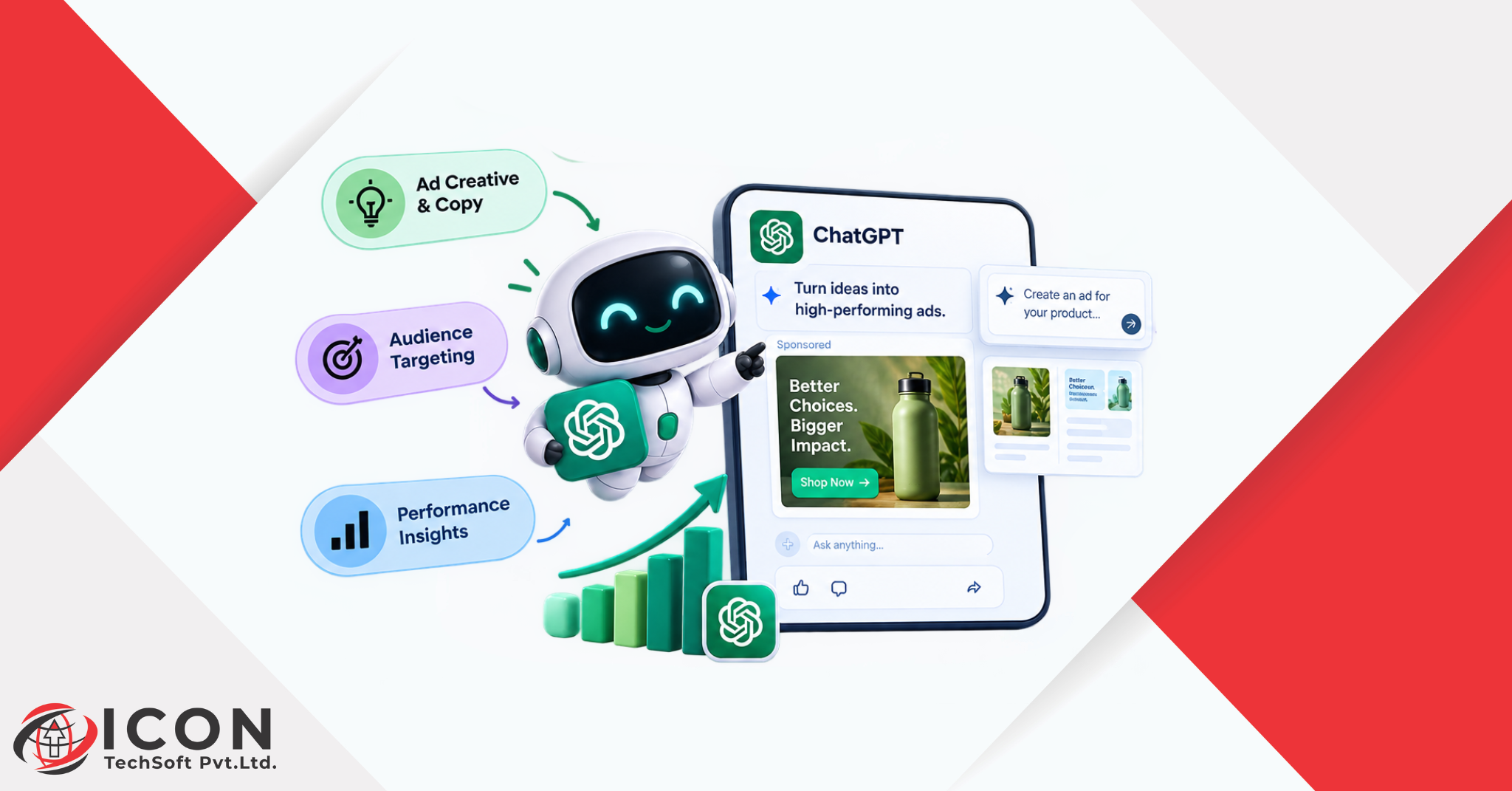
If you are asking what are ChatGPT ads, the short answer is this: they are paid placements that appear inside the ChatGPT experience. A business pays to have its product, service or message shown to a person who is using the chatbot. These ChatGPT ads are clearly marked as ads, and they are meant to sit alongside the AI’s answers rather than replace them.
Think of ChatGPT ads like the sponsored result you see at the top of a Google search page. The search results are the main content, and the ad is a paid extra that is labeled so you know the difference. ChatGPT ads follow the same basic idea, but the setting is a conversation instead of a list of links.
A few points are worth keeping in mind:
It also helps to understand why ads are showing up at all. Running large AI models is expensive. Servers, chips and research cost a huge amount of money. Subscriptions cover part of that cost, but advertising, including ChatGPT ads, is one of the oldest ways to make a free product work for everyone. So when people talk about the ChatGPT advertising platform, they are really talking about a new business model that could let more people use AI for free while brands pay to reach them.
For marketers, the key idea is simple. ChatGPT ads are not just another banner on another website. They live inside a tool that people use to think, ask and decide. That changes the mindset, the message and the way you measure success.
Let us talk about how do ChatGPT ads work in plain terms. Because the program is still developing, we can only describe the general approach and the likely patterns. Always check official OpenAI announcements for the latest details before you plan a budget.
Based on what has been shared publicly, ChatGPT ads are expected to show up as clearly labeled sponsored content near the AI’s response, not mixed into the answer itself. You might see a small card, a short text box or a product suggestion placed below or beside a reply. The label should make it obvious that the content is paid.
The basic flow looks like this:
The important part is step two. The answer is written first and is meant to stay independent of any ChatGPT ads beside it. The ad is an add-on, not a rewrite of the AI’s opinion. If that promise holds, it protects the thing that makes people trust the tool in the first place.
In a normal ad system, you see a message and either click or scroll past it. ChatGPT ads break that pattern. A conversation is different because it keeps going. A person can ask, get an answer, ask a better question, and narrow down what they want. That back and forth gives ChatGPT ads more room to be helpful.
Imagine someone asking, “What is a good laptop for video editing under 1,000 dollars?” The AI explains what to look for, such as memory, graphics power and screen quality. A sponsored card from a laptop brand might then appear with a relevant model. The person might then ask, “Is that one good for travel?” and keep the chat going. A ChatGPT ad in that spot is no longer a random interruption. It is part of a decision process the user started.
This is also why many people see AI advertising as a big shift. The ad is closer to a recommendation from a helpful assistant than a loud banner. That can be powerful, but it also means the bar for quality is much higher. A bad or irrelevant ad will feel out of place very quickly.
Intent is the heart of this topic. Intent means what a person actually wants to do. Someone who types “best running shoes for flat feet” has a clear goal. They are researching a purchase. A good system for ChatGPT ads tries to match that intent with a helpful offer.
Context matters just as much. In a chat, the AI can see the whole conversation, not just one keyword. It can understand that the person has a small budget, lives in a certain country, and cares more about comfort than style. When ChatGPT ads use that kind of context, the match between the ad and the need could be much tighter than with old-style keyword targeting.
OpenAI has said that it wants to protect user privacy and avoid showing ads in sensitive areas such as health, mental health or politics. It has also said it does not plan to sell user conversations to advertisers. Because policies can change, marketers should read the official guidelines carefully and expect rules around sensitive topics to stay strict.
To understand where this fits, it helps to compare ChatGPT ads with the platforms you already use. Each channel has its own strengths, and ChatGPT ads are not likely to replace any of them overnight.
Google Ads is built around keywords. You pick the words people type, bid on them, and your ad shows up when someone searches. It is fast, measurable and very mature. Years of tools, reports and best practices sit behind it.
ChatGPT ads, by contrast, are tied to a conversation. Instead of one short phrase, the system can see a long, detailed question. This could make targeting for ChatGPT ads feel more natural, but it also means there are fewer proven playbooks. Here is a simple comparison:
This is the main answer to how are ChatGPT ads different from Google Ads: one is built for searching, the other is built for talking.
Social media ads work in a different way from ChatGPT ads. On Instagram, Facebook or TikTok, people are scrolling for fun, and your ad interrupts their feed. Targeting depends on interests, age, behavior and past activity. These ads are great for creating awareness and building demand, because they reach people who were not actively looking for you.
ChatGPT ads sit closer to the moment of need. A person who asks the AI for help with a problem is already thinking about a solution. That is a stronger signal than a casual scroll. On the other hand, social platforms offer rich video, big audiences and detailed targeting tools that a new chat-based format may not match for some time.
So instead of asking which is better, marketers should ask which job each one does, and where ChatGPT ads fit. Social ads help people discover you. ChatGPT ads may help people choose you when they are ready to decide.
Search intent is usually short and direct. Someone types “plumber near me” and wants a plumber. Conversational intent is richer. Someone may write, “My kitchen sink is leaking under the cabinet and I am not sure if I can fix it myself. What should I do?” That one message holds a problem, a doubt and a possible need for a local professional.
The second type of message gives anyone running ChatGPT ads much more to work with. It shows the stage of the journey, the level of urgency and the worry behind the question. Marketers who understand conversational intent will be able to write ChatGPT ads that speak to the real situation, not just a keyword. This is one of the biggest ideas in AI in digital marketing today: moving from matching words to understanding needs.
Creative has always been the part of advertising that people remember. With AI in the mix, the way we think about creative is changing too. AI ad creative refers to ad content that is made, tested or improved with the help of artificial intelligence, and it will likely play a big role in this space.
In a chat setting, a generic ad feels out of place. A long, loud brand message will look strange next to a thoughtful answer. The best ChatGPT ads will probably be short, clear and helpful. They should look like a useful next step, not a sales pitch.
AI ad creative tools can help here. They can produce many versions of a headline or description, so you can test which one fits a certain type of question. For example, a software company might write one message for a founder asking about cost and another for a manager asking about team features. Instead of one ad for everyone, you could prepare a small set of messages that match different needs.
Personalization does not have to mean creepy. In this setting, it mostly means being relevant to the topic of the conversation. If the person is asking about gardening tools for a small balcony, a ChatGPT ad for compact planters makes sense. An ad for a car does not.
Contextual relevance is what keeps ChatGPT ads from feeling like an intrusion. It also protects your budget, because a relevant ChatGPT ad gets more attention than a random one. When you build your creative, think about the question the person might be asking and write your message as a helpful reply to it.
Some simple tips for writing AI ad creative for a conversational platform:
For years, many ad teams have depended on eye-catching images and bold headlines. In a chat setting, the words matter more. A ChatGPT ad has to earn trust in a few seconds, and it sits next to an answer that the user already values. That means your message must be honest, specific and useful.
Marketers may also need to think in terms of conversations, not single ads. If a user can ask a follow-up about your product, what will they find? Is your website ready to answer their next question? Does your landing page match the promise in the ad? Creative strategy may shift from “one ad, one click” to “one helpful path from question to decision.”
The ChatGPT advertising platform is still taking shape, so planning requires a little patience. Here is what marketers can reasonably expect to think about, along with a reminder to confirm every detail through official sources.
Based on early information and how similar platforms have grown, possible opportunities include:
Not every category will be allowed for ChatGPT ads. Sensitive topics are likely to stay restricted, and advertisers may need to follow stricter rules than on older platforms.
Targeting on a chat platform may work very differently from what you are used to. Instead of picking only demographics and keywords, you may be matched based on the topic and context of the conversation. This favors advertisers who have a clear understanding of their customer’s real questions.
Here is a useful exercise. Write down the ten most common questions your customers ask before they buy. These are the moments where ChatGPT ads could appear. If you know these questions well, you will be ready to build ChatGPT ads that fit.
Also keep in mind that early access to ChatGPT ads is often limited. Programs like this often begin with a small group of advertisers, certain countries and certain budget levels. If your market is outside the first group, you may need to wait, so use that time to prepare.
Measurement is where a new platform like the ChatGPT advertising platform often struggles. Marketers are used to clicks, impressions, conversion rates and cost per acquisition. In the early days, ChatGPT ads may offer fewer reporting tools than older platforms. You may not get the same detail on audience behavior or attribution that you get from Google or Meta.
That is not a reason to avoid testing ChatGPT ads. It is a reason to be organized. Use unique tracking links, set clear goals before you start, and compare results with your other channels. Keep your first budget for ChatGPT ads small, learn what works, and grow only when the numbers make sense.
Now let us look at the benefits of ChatGPT ads for businesses. Because the format is new, these are potential advantages rather than guaranteed results, but they are worth understanding.
The biggest promise of ChatGPT ads is timing. When someone asks an AI for help choosing something, they are close to a decision. A relevant ChatGPT ad at that moment could be more valuable than a general ad shown to someone who is not thinking about the topic at all.
Because the AI understands the whole conversation, ChatGPT ads can be matched to a real need instead of a single keyword. For businesses, this can mean fewer wasted impressions and a better chance that the right person sees the right offer. It can also mean a better experience for users, who see fewer random ads.
Smaller and newer brands often struggle to appear in crowded search results. A conversation-based platform may create new ways for them to be found, especially if they solve a specific problem well. A small brand running ChatGPT ads with a clear, helpful message might stand out more than it would in a long list of competing links.
Customers move through stages: they notice a problem, research solutions, compare options and finally decide. Conversations can cover all of these stages in one place. That gives marketers a chance to support the journey with the right message at each step, from a simple awareness message to a clear comparison or offer.
In short, the main benefits of ChatGPT ads for businesses are better timing, stronger relevance, new discovery routes and closer support for the buying process. These advantages depend on how the platform develops, but they explain why so many marketers are paying attention.
The bigger story is not just one new ad format. It is how AI in digital marketing is changing the way people find information and make choices.
For over twenty years, online discovery has meant typing a query, scanning a page of results and clicking a few links. AI tools, and now ChatGPT ads, are changing this habit. People now ask a question and receive a direct answer, often with suggestions and next steps. Fewer clicks may be needed to reach a decision.
If ChatGPT ads become a regular part of this experience, the places where brands compete for attention will shift. Some of the attention that once went to the search results page may move into chat windows.
Conversational marketing is about talking with customers, not just at them. Brands have already used chatbots, messaging apps and live chat to do this. AI advertising adds a new layer, because the first conversation may now happen on a platform that the brand does not own.
This means your brand voice, your product information and your reputation need to be ready for questions you never planned for. When someone asks the AI about your category, what do they hear? Is your information clear, current and easy to understand? These questions will matter more over time.
SEO is not going away, but it is changing. Search engines and AI tools both depend on good content. Pages that answer real questions clearly, show real expertise and earn trust are more likely to be useful in both worlds. Thin or copied content will lose value in both.
For paid advertising, expect a more mixed approach with ChatGPT ads. Many teams will keep spending on search and social while testing ChatGPT ads and other conversational channels with a small budget. Instead of replacing old channels, ChatGPT ads may become one more tool in the mix. The teams that learn early, with careful testing, will be in a stronger position when the format matures.
It is also a good time to treat SEO and paid media as partners. The questions you target in your blog posts are often the same questions people ask AI tools. Insights from one can improve the other.
No new platform is perfect, and ChatGPT ads come with real questions that marketers should think about honestly.
People use ChatGPT to get help, not to be sold to. If ChatGPT ads are too frequent, too pushy or not relevant, users may feel annoyed and trust the product less. For advertisers, that creates a risk. A poor experience with ChatGPT ads reflects on the brand, so quality and restraint matter.
Conversations with AI can be personal. People share work problems, plans and sometimes private worries. Because of that, privacy is a serious concern with ChatGPT ads. Users want to know how their data is used and whether their chats are being turned into advertising signals. Advertisers must follow platform rules closely and avoid any approach that feels invasive.
Trust is hard to earn and easy to lose. If users believe that the AI’s answers are being shaped by advertisers, they may stop relying on the tool. That is why a clear separation between the answer and the ad is so important, and why marketers should respect it.
As mentioned earlier, reporting for ChatGPT ads may be limited at first. A user might see your ad in ChatGPT, then search your brand on Google later and buy from a different device. Tracking that path is hard even on mature platforms. On a new one, it can be even harder. Marketers should expect some guesswork and rely on a mix of direct results and overall trends, such as growth in branded searches.
The final challenge belongs mostly to the platform, but it affects everyone. The AI must stay helpful and honest while also supporting a paid system. If that balance slips, both users and advertisers lose. Marketers can help by creating ChatGPT ads that add value instead of noise.
A short list of questions to ask before you commit budget:
You do not need to wait for full access to ChatGPT ads to get ready. Many of the best steps are things that help your marketing right now.
AI tools learn from the web, and people trust brands they recognize. Work on making your brand clear and consistent across your website, social profiles, review sites and directories. Make sure your business name, description and key details match everywhere. Positive reviews and mentions from real customers also help build the kind of reputation that supports both organic and paid growth.
AI-ready content is simply content that is clear, accurate and easy to understand. Here is how to move in that direction:
Content like this helps your SEO today and makes it easier for AI tools to understand what you offer.
Stop thinking only in keywords and start thinking in situations. What problem is the customer trying to solve? What are they worried about? What would make them feel confident enough to act? Map your messages to these situations. A person comparing options needs a different message from a person who is just learning about a problem.
Talk to your sales and support teams. They hear real questions every day, and those questions are a gold mine for both content and ChatGPT ad ideas.
When the platform opens to your business, start small. Set a test budget that you can afford to lose, pick one or two clear goals and run a few simple tests. Try different messages, compare the results of your ChatGPT ads with your search and social campaigns, and write down what you learn. Keep your landing pages fast, mobile friendly and closely matched to the ad.
It also helps to prepare a flexible creative library. Write several short messages for each main customer question. Having these ready will let you move quickly when access opens up.
Finally, stay informed. Follow official OpenAI updates, trusted marketing news sources and your own account contacts. Rules, prices and formats are likely to change quickly in the early period.
It is hard to say exactly how AI advertising will look in five years, but a few trends seem clear.
First, AI will become part of everyday marketing work. Teams already use it for research, writing, design ideas and reporting. As AI in digital marketing grows, the work will shift from doing every task by hand to guiding, checking and improving what the tools produce. Human judgment, taste and honesty will matter more, not less.
Second, AI advertising will become more conversational. Ads may appear inside assistants, voice tools, shopping helpers and apps we have not seen yet. Brands that understand how people ask for help will have a head start.
Third, trust will be the main currency. People are more aware of how their data is used. Platforms and brands that are open, respectful and useful will win loyalty. Those that treat users as targets will lose it.
Fourth, other companies are likely to follow the lead of ChatGPT ads in AI advertising. Other AI assistants and search tools are also exploring ways to include sponsored content. Marketers should expect a wider set of AI advertising options over time, each with its own rules and strengths.
The best approach is to stay curious and keep learning. The tools will change, but the basics stay the same: know your customer, offer real value and communicate with honesty.
ChatGPT ads are paid, clearly labeled placements that appear inside the ChatGPT experience. They are designed to show relevant products or services alongside the AI’s answers, without changing what the AI says. The ChatGPT ads program is still in its early stages, so formats and rules may continue to change.
When a user asks a question, the AI writes its answer first. If the topic matches an advertiser’s offer, a sponsored unit may be shown near the answer. Matching is based on the topic and context of the conversation. Users can ignore the ChatGPT ad, click it or continue the conversation. Always check OpenAI’s official guidance for the most current details.
Not necessarily. New ad platforms like ChatGPT ads usually start with limited access, selected regions and certain types of advertisers. Some categories, especially sensitive ones, may be restricted. Businesses should watch official announcements to learn when and how they can join the ChatGPT advertising platform.
The possible benefits of ChatGPT ads for businesses include reaching people at the moment they are deciding, showing more relevant and contextual messages, finding new ways for customers to discover a brand, and supporting the full customer journey from first question to final choice. Results will depend on the product, the creative and how the platform develops.
Google Ads is built around search keywords and a long list of results. ChatGPT ads are tied to a conversation and appear next to a direct AI answer. Google Ads is more mature, with deeper tools and data, while ChatGPT ads are newer and still developing. Many marketers will likely use both.
ChatGPT ads are one of the most talked-about changes in digital marketing, and for good reason. They bring advertising into a place where people ask real questions and make real decisions. That gives ChatGPT ads a chance to be more helpful, more relevant and more timely than many older ad formats allow.
At the same time, ChatGPT ads are still a young platform. Formats, rules, pricing and reporting will keep changing, and there are fair concerns about privacy, trust and measurement. The smartest move is not to rush into ChatGPT ads or to ignore them, but to prepare with care.
Here is a quick recap of what ChatGPT ads are, how ChatGPT ads work and what to remember:
If you take one idea from this guide, let it be this: people are changing how they look for answers, and marketing has to follow. Start learning about ChatGPT ads now, keep your content and brand strong, and be ready to test when your turn comes. The marketers who stay curious and put the customer first will be the ones who benefit most from this new chapter of AI advertising.