-
Gujarat, India
- info@icontechnology.in
- 24/7 Customer Support
Gujarat, India
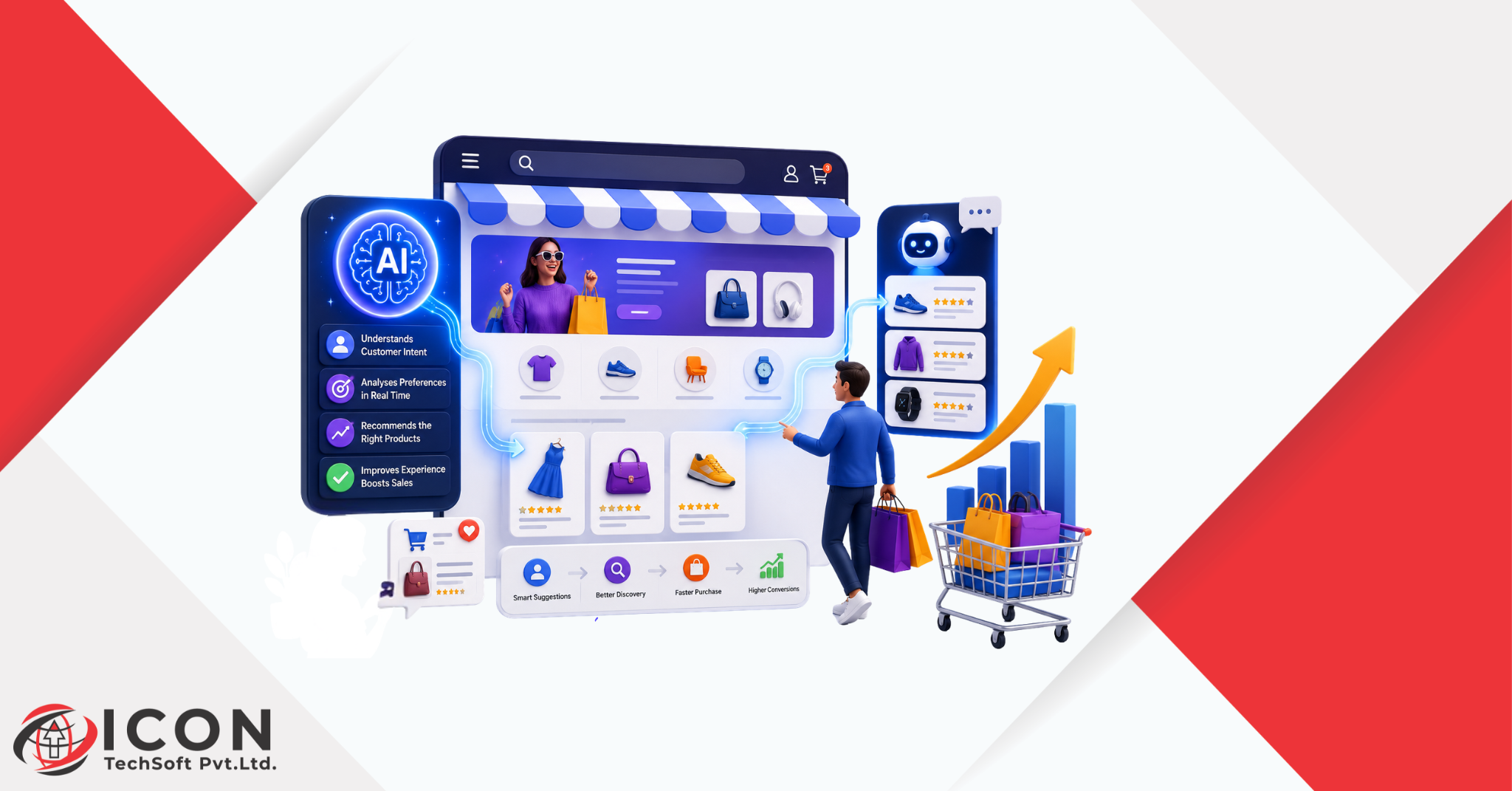
Online shopping has changed a lot in the last few years. Buyers no longer want to scroll through hundreds of products to find what they need. They want quick answers, smart suggestions, and a shopping experience that feels personal. This is exactly where AI Shopping Assistants come in. These tools are helping online stores talk to customers, understand what they want, and guide them to the right product in seconds.
The Rise of AI in eCommerce
AI eCommerce tools have moved from being a nice extra to becoming a core part of how online stores work. Retailers of every size, from small boutiques to large marketplaces, are using AI to understand customer behavior, predict what shoppers want, and offer help at every step of the buying journey. This shift is not just about technology. It is about meeting customers where they are and giving them a smoother, faster way to shop.
Why Online Stores Are Adopting AI Faster Than Ever
Online stores are adopting AI faster than ever because customers expect instant answers. People are used to fast replies from apps and websites, and they carry the same expectation into shopping. Retail AI helps stores keep up with this demand without needing a huge support team. It also helps businesses save money while still giving buyers a helpful and friendly experience.
AI Shopping Assistants are smart tools built into online stores that help customers find products, answer questions, and complete purchases. They use natural language processing to understand what a shopper types or says, and they use data about products, past purchases, and browsing habits to give useful answers. Instead of just showing a list of products, these assistants have a conversation with the shopper, almost like talking to a helpful store employee.
These tools work by connecting to a store’s product catalog, order history, and customer data. When a shopper asks a question like “show me running shoes under three thousand rupees,” the assistant understands the request and pulls matching products instantly. Some assistants also remember past chats, so the experience feels more personal each time.
Many people confuse AI Shopping Assistants with traditional AI Chatbots, but they are not the same. Traditional chatbots often follow a fixed script. They can only answer questions they are programmed for, and they struggle when a shopper asks something unexpected. AI Shopping Assistants, on the other hand, understand natural language and context. They can handle open-ended questions, learn from previous conversations, and offer product recommendations based on real shopper intent. This makes them far more useful for eCommerce Automation and modern online stores.
Shoppers today expect stores to know what they like. They want fast replies, honest answers, and product suggestions that actually make sense for them. This is a big shift from just a few years ago when a simple search bar was enough. Now, buyers compare online shopping with the ease of talking to a friend for advice, and AI Shopping Assistants help stores meet that expectation.
The future of AI eCommerce is centered around making shopping feel effortless. Stores are moving away from static web pages and toward dynamic, conversation-driven experiences. Instead of clicking through many pages, customers can simply describe what they need and get a shortlist of matching Online Stores products right away. This shift is changing how businesses design their websites and apps.
Some of the biggest AI Shopping Trends this year include voice-based shopping, AI-generated product descriptions, visual search tools, and hyper-personalized recommendations. Retailers are also using AI to predict demand and manage stock better. These trends show that AI is not just a support tool anymore. It is becoming a core part of how stores plan, market, and sell products.
One of the biggest changes AI brings is Smart Shopping Assistants that give truly personalized suggestions. Instead of showing the same products to every visitor, these tools look at browsing history, past purchases, and even the time of day to suggest items a shopper is more likely to buy. This makes shopping feel less like searching and more like getting advice from someone who knows your taste.
Online shoppers do not always shop during office hours. Many browse late at night or during weekends. AI Shopping Assistants are available all day and night, answering questions about shipping, returns, sizing, and product details without any wait time. This constant availability builds trust and keeps customers from leaving the site out of frustration.
Finding the right product used to mean scrolling through many pages or using filters that did not always work well. Now, AI Product Recommendations help shoppers discover items faster by understanding natural requests. A customer can simply type what they are looking for in plain words, and the assistant narrows down the choices instantly.
Traditional search bars only match exact keywords. Smart search, powered by AI, understands meaning and intent. If a customer searches for “warm jacket for winter trip,” the assistant understands the context and shows relevant products, even if those exact words are not in the product title. This makes search far more useful and reduces the frustration of finding nothing.
Cart abandonment is a major problem for online stores. Many shoppers add items to their cart but leave without completing the purchase. AI Shopping Assistants help reduce this by answering last-minute questions, offering discounts at the right moment, or reminding customers about items left behind. This gentle nudge often brings shoppers back to complete their order.
When shopping feels like a conversation instead of a chore, customers stay longer and interact more with the store. AI Chatbots and assistants keep the experience interactive by asking follow-up questions, suggesting related products, and responding to feedback in real time. This higher engagement often leads to more sales and repeat visits.
Businesses that use AI Shopping Assistants often see a rise in conversions because customers get help exactly when they need it. Instead of leaving the site confused, shoppers get quick answers that guide them toward a purchase. This directly impacts revenue for online stores of all sizes.
Fast, accurate, and friendly responses lead to happier customers. When shoppers do not have to wait for a human agent or search endlessly for answers, their overall experience improves. Satisfied customers are also more likely to leave positive reviews and return for future purchases.
Hiring a large support team to handle every customer question can be expensive. AI Shopping Assistants handle common questions automatically, freeing up human agents to focus on complex issues. This reduces the overall cost of running Online Stores while still maintaining good service quality.
Every conversation with an AI assistant generates valuable data. Businesses can see what questions customers ask most, which products get the most interest, and where shoppers usually get stuck. This information helps improve products, marketing, and website design over time.
During sales events or festive seasons, customer questions can spike suddenly. AI Shopping Assistants can handle thousands of conversations at once without any drop in response quality. This kind of scalability is hard to achieve with a human-only support team.
Modern assistants can understand everyday language, including slang, spelling mistakes, and casual phrasing. This makes the conversation feel natural instead of robotic, which improves the overall shopping experience.
A strong recommendation engine is at the heart of any good AI Shopping Assistant. It should suggest products based on real shopper behavior, not just random popular items. Good recommendations feel relevant and helpful rather than pushy.
Online stores often serve customers from different regions and languages. Multilingual AI assistants allow businesses to support a wider audience without hiring separate teams for each language, making global selling much easier.
Voice search is becoming more common as people get used to talking to their phones and smart devices. AI Shopping Assistants that support voice commands let customers shop hands-free, which is especially useful for quick reordering or browsing on the go.
Customers today shop across websites, apps, and social media. A good AI assistant should work smoothly across all these channels, keeping the shopping experience consistent no matter where the customer starts their journey.
Beyond just recommendations, a truly Intelligent Shopping Experience adapts to each customer. This includes remembering preferences, suggesting sizes based on past orders, and adjusting tone based on how the customer communicates.
Fashion brands use AI assistants to help customers find the right size, style, and color based on their preferences. Some assistants even suggest complete outfits based on a single item a shopper is viewing, making the shopping experience feel more like personal styling advice.
Electronics stores often deal with technical products that confuse average shoppers. AI Shopping Assistants simplify this by comparing specifications in plain language and helping customers choose between similar models based on their actual needs, rather than technical jargon.
Grocery platforms use AI to remind customers about regularly purchased items, suggest recipe-based product bundles, and manage quick reordering. This kind of AI Powered Commerce makes routine shopping faster and more convenient.
B2B platforms are also adopting AI assistants to handle bulk orders, answer detailed product questions, and guide business buyers through complex catalogs. This shows that AI Shopping Assistants are not limited to individual consumers but are equally valuable for business customers.
AI assistants respond instantly, while traditional support often involves waiting in a queue. This speed difference greatly impacts customer satisfaction, especially for simple questions that do not need human judgment.
Because AI assistants pull directly from product data and order history, they often give more consistent and accurate answers compared to human agents who may not have every detail memorized.
Traditional support teams work in shifts and have limited hours. AI Shopping Assistants are available every hour of the day, every day of the week, which matters a lot for online stores serving customers across different time zones.
Running a full human support team around the clock is costly. AI assistants handle a large share of repetitive questions at a much lower cost, allowing businesses to allocate their budget toward more strategic areas.
While human agents bring empathy and judgment for complex issues, AI assistants excel at quick, repetitive tasks. The best approach often combines both, giving customers the speed of AI along with the option to reach a human when needed.
AI Shopping Assistants rely on customer data to give personalized suggestions, which raises valid privacy concerns. Businesses need to be transparent about what data is collected and how it is used, and they must follow data protection regulations carefully.
While AI has improved a lot, it is not perfect. Sometimes assistants may misunderstand a request or suggest irrelevant products. Continuous training and monitoring are needed to keep accuracy high.
Not every issue can be solved by AI. Complex complaints, emotional situations, or unique cases still need a human touch. Businesses should always offer an easy way for customers to reach a real person when needed.
Setting up a capable AI Shopping Assistant requires investment in technology, integration, and training. Smaller businesses may find the initial cost challenging, though many affordable platforms are now making this more accessible.
Start by researching platforms that fit your store’s size, budget, and technical needs. Look for solutions that support the specific features your business requires, such as multilingual support or voice search.
Before implementation, decide what you want the assistant to achieve. This could be reducing support tickets, increasing average order value, or improving product discovery. Clear goals help guide the setup process.
Feed the assistant with accurate product information, common customer questions, and your brand’s tone of voice. The better the training data, the more helpful and accurate the assistant will be.
Connect the assistant with your website, app, and any other sales channels you use. Smooth integration ensures customers get the same quality experience no matter where they shop.
After launch, track how the assistant performs. Look at customer satisfaction, conversion rates, and common issues. Use this data to continuously improve responses and recommendations.
Avoid making the assistant sound robotic or overly scripted. A natural, friendly tone makes customers more comfortable and willing to interact.
Products, prices, and policies change often. Make sure the assistant’s knowledge base stays updated so it never gives outdated or incorrect information.
The best customer experience often comes from a mix of AI speed and human empathy. Always give customers an easy path to a human agent for complicated issues.
Regularly review conversation logs and customer feedback to spot patterns. This helps identify where the assistant is working well and where it needs improvement.
Generative AI is making assistants smarter and more creative. Instead of giving generic answers, future assistants will generate detailed, context-aware responses that feel more human and helpful.
As voice assistants become more common, shopping through voice commands will grow. Customers will be able to order products, track deliveries, and get recommendations simply by speaking.
Visual search allows customers to upload a photo and find similar products instantly. This technology is becoming more accurate and will play a bigger role in how people discover products online.
Future AI Shopping Assistants will go beyond basic recommendations. They will understand deeper patterns in customer behavior, offering suggestions that feel almost intuitive and highly tailored to each individual.
AI will increasingly predict what customers need before they even ask. From reordering essentials automatically to suggesting products based on upcoming events or seasons, predictive shopping will make the entire journey smoother.
AI Shopping Assistants are smart digital tools that help customers find products, answer questions, and complete purchases through natural, conversation-based interactions on online stores.
They improve sales by offering personalized recommendations, reducing cart abandonment, answering questions instantly, and keeping customers engaged throughout their shopping journey.
AI Shopping Assistants are more advanced than traditional chatbots because they understand natural language, learn from past interactions, and offer relevant product suggestions rather than following a fixed script.
Yes, many affordable platforms now offer AI Shopping Assistant solutions designed specifically for small and growing businesses, making this technology accessible beyond just large retailers.
Costs vary depending on features, integration needs, and platform choice. Some basic solutions are budget-friendly, while advanced, fully customized assistants require a larger investment.
AI Shopping Assistants are reshaping how people shop online by making the experience faster, more personal, and available at any hour. From personalized recommendations to smart search and reduced cart abandonment, these tools are solving real problems for both shoppers and businesses.
As customer expectations continue to rise, waiting to adopt this technology could mean falling behind competitors. Businesses that invest in AI Shopping Assistants today are better positioned to meet future demand and build lasting customer loyalty.
The future of online shopping is clearly moving toward smarter, more human-like digital experiences. AI Shopping Assistants are not just a passing trend, they are becoming an essential part of how successful online stores operate and grow in the years ahead.