-
Gujarat, India
- info@icontechnology.in
- 24/7 Customer Support
Gujarat, India
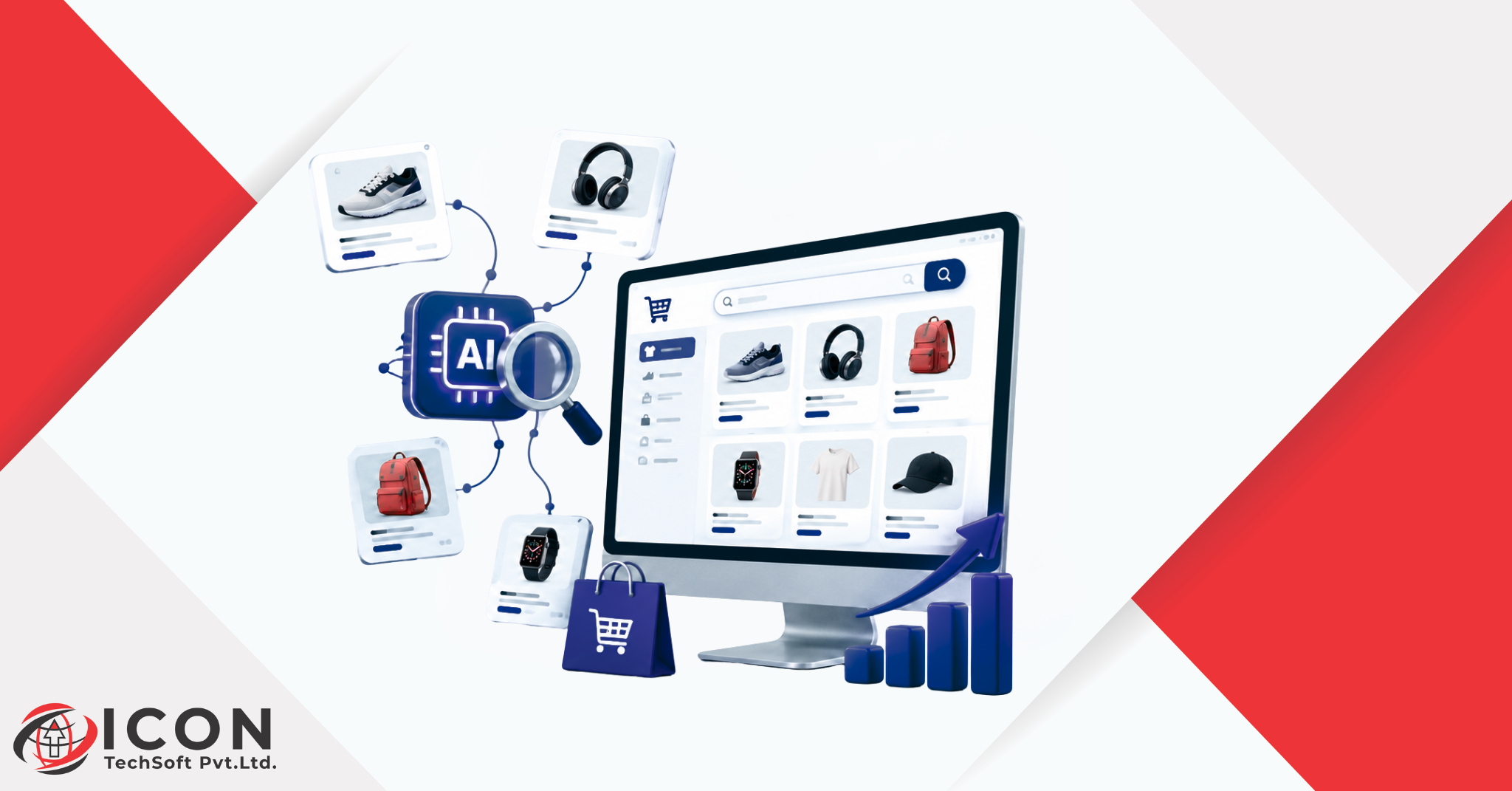
Shopping has changed. A few years ago, most buyers typed a short phrase into Google, scrolled through ten blue links, and clicked a few stores. Today, many people simply ask a question to an AI tool and get a direct answer with product suggestions. They might type, “What is the best running shoe for flat feet under 5,000 rupees?” and receive a short list of options without ever opening a search results page.
This shift is the reason AI SEO has become one of the most important topics for online store owners in 2026. AI SEO is the practice of making your content, products, and brand easy for AI systems to find, understand, and recommend. If your e-commerce website is not ready for this new way of searching, your competitors will get the mentions, the clicks, and the sales.
The good news is that AI SEO does not replace everything you already know. Strong e-commerce SEO still forms the base. But there are new habits to learn, such as writing for questions, adding clear product facts, and building a brand that AI tools trust.
In this guide, you will learn how AI search works, why it matters for online stores, and what steps you can take right now. We will cover product pages, structured data, technical fixes, brand trust, and ways to measure results. Everything is explained in simple words so you can start applying it today.
AI search is a way of finding information where an AI system reads many sources, understands your question, and writes a direct answer. Instead of giving you a list of links only, an AI search engine builds a response in plain language. Many of them also show the sources they used, so people can click through to learn more.
Popular examples include ChatGPT search, Google AI Overviews, Google AI Mode, Perplexity, Microsoft Copilot, and Gemini. Each one works a little differently, but the basic steps are similar.
Here is a simple view of how an AI search engine works:
For shoppers, this means the journey is shorter. They describe what they need, the tool compares options, and the buyer may land on a product page that is already half sold. That is why AI search optimization is now a serious part of any online growth plan.
The key point is this: AI tools do not just match keywords. They try to understand meaning. A page that clearly answers a real shopper question has a better chance of being picked than a page that only repeats a phrase many times.
You might wonder if this is only a passing trend. It is not. More people use AI tools for research before they buy, especially for products that need comparison, like electronics, skincare, furniture, and fitness gear. Even if your customers still use classic search, AI answers now appear above those results in many cases.
Here is why AI search matters for your e-commerce website:
Buyers ask more detailed questions. People now type full sentences with budget, use case, and preferences. If your pages answer those details, you can appear in the response.
Fewer clicks go to the top results. When an AI answer satisfies the user, they may click fewer links. The brands that are mentioned inside the answer win the attention.
Trust is built before the visit. When an AI tool recommends your store, the shopper already feels some confidence in you. This often leads to better quality traffic.
Early movers get an advantage. Many store owners have not started working on AI SEO for e-commerce yet. If you start now, you can build authority while the competition is still low.
Product discovery is moving beyond websites. Shoppers may find your item through a chat, a voice assistant, or a visual search. Your product data must be clean enough to travel across these places.
In short, e-commerce AI search is not a side project anymore. It is a new front door to your store, and you want it to be open.
Many people ask whether they need to throw away their old SEO plan. The answer is no. Traditional SEO and AI SEO work together. Still, there are real differences in how you plan your work.
| Area | Traditional SEO | AI SEO |
|---|---|---|
| Goal | Rank high in a list of links | Be mentioned or cited inside an answer |
| Keywords | Exact match and close variations | Topics, meaning, and natural questions |
| Content style | Keyword focused pages | Clear, factual, helpful answers |
| Key signals | Backlinks, page speed, on-page tags | Brand mentions, structured data, trust, clarity |
| Search behavior | Short phrases | Long, conversational questions |
| Success metric | Rankings and clicks | Visibility, citations, and assisted sales |
A few more points are worth noting.
In old-style e-commerce search optimization, a page could rank by matching a keyword and gaining some links. With AI SEO, the system also checks whether your content is accurate, easy to quote, and supported by other trusted sources. Your brand name appearing across reviews, articles, and communities starts to matter a lot.
Also, AI tools like short, direct answers. If your product page buries the key facts under long paragraphs and pop-ups, the tool may skip it. A page that states the size, material, price, and use clearly is easier for an AI search engine to use.
The best approach is to keep your solid SEO base and then add the AI layer on top.
To get recommended, you need to know how products get picked. While every platform keeps its exact method private, the general pattern is clear from how these tools behave.
Step one: Crawling and access. AI systems use bots to read websites. If your robots.txt file blocks them, or your pages load only through heavy scripts, the bots may not see your content. Allowing reputable AI crawlers is a basic requirement for AI search optimization.
Step two: Understanding the page. The system looks at your headings, product details, schema markup, images, and reviews. Clear structure helps it understand what you sell, who it is for, and how it compares to others.
Step three: Checking trust. AI tools prefer sources that look reliable. They notice consistent business details, real customer reviews, expert content, and mentions on other respected websites.
Step four: Matching to the question. When a shopper asks something, the tool looks for products and pages that fit the exact need. A page that says “waterproof hiking backpack for women, 30 liters, lightweight” will match better than a vague page that says “premium bag.”
Step five: Building the answer. The AI chooses a few options, adds short reasons, and often links to the source. Products with complete data, strong reviews, and clear benefits are easier to include.
Many shopping features also pull from product feeds. If you use Google Merchant Center or similar feeds, keeping them accurate and updated helps your products show up in AI shopping results too.
Now let us get to the practical part. These are the main strategies that help an e-commerce website do well in AI search.
Your product title is the first thing both people and AI tools read. A weak title like “Running Shoes Model X” tells very little. A better title is “Lightweight Running Shoes for Flat Feet, Breathable Mesh, Men’s Size 6 to 11.”
Follow these tips for e-commerce search optimization on titles and descriptions:
A good description helps a shopper decide and helps AI SEO at the same time. When your text clearly says who the product is for and what problem it solves, AI systems can match it to real questions much more easily.
Structured data, also called schema markup, is code that explains your page content to machines in a standard format. Think of it as a label on a box. Without it, the system has to guess what is inside.
For AI SEO for e-commerce, these schema types are very useful:
Keep the schema accurate. If your markup says a product is in stock but the page says sold out, you lose trust. Test your pages with Google’s Rich Results Test and the Schema Markup Validator, and fix any errors you see.
Strong structured data will not guarantee a spot in AI answers, but it removes confusion and gives every AI search engine cleaner facts to use.
Product pages alone are not enough. AI tools love content that teaches. When you publish helpful guides, you show that your store knows the topic well.
Here are content types that work well for an e-commerce website:
When you write these, focus on honesty. If a product is not right for every person, say so. AI tools and shoppers both value balanced advice. Add your own testing, photos, or data when possible. Original information is harder to copy and more likely to be cited.
Also, write in short sections with clear headings. Each section should answer one question well. This makes it simple for an AI tool to lift a clean answer from your page.
Even the best content will not help if your site has technical problems. Good technical health remains a core part of e-commerce SEO and supports every AI SEO effort.
Check these points regularly:
Think of technical SEO as the foundation of a house. You may not notice it, but everything depends on it.
AI tools do not only read your website. They also look at what the wider web says about you. If many trusted places mention your brand in a positive way, you are more likely to be recommended.
Ways to build authority for AI search optimization:
Trust is slow to build but very strong once you have it. In the age of AI SEO, a trusted brand name is one of your best assets.
People talk to AI tools the way they talk to a friend. Their questions are longer and more detailed. To match them, your content should sound natural and answer full questions.
Try these steps:
For example, instead of a generic category page, add a short guide on top that answers, “What should I look for when buying a laptop for college?” This simple step can improve e-commerce AI search visibility and also help human shoppers.
ChatGPT search is now a popular place for product research, so it deserves its own plan. While no one can promise a ranking, these steps give your store a better chance.
Allow the right bots. OpenAI uses crawlers to read the web. Check your robots.txt file and make sure you are not blocking the search crawler if you want to appear. You can still manage other bots separately based on your own policy.
Make your pages easy to read as plain text. Put product facts in the page content, not only inside images or tabs that need clicks to load.
Be specific and factual. ChatGPT tends to favor clear details such as dimensions, ingredients, warranty length, and return policy. Vague marketing words add little.
Publish comparison and “best of” content. Many shoppers ask ChatGPT for the best option in a category. If your own guide fairly compares products, including your own, it may be used as a source.
Keep your feed and pricing up to date. Fresh and accurate data is more useful to any AI search engine than outdated listings.
Build presence on trusted third-party sites. ChatGPT often draws from review sites, publications, and discussion platforms. Being mentioned there raises your chances.
Test it yourself. Ask ChatGPT the questions your customers would ask. Notice which brands appear, which sources are cited, and what details they highlight. Then improve your own pages to cover the same ground better.
This approach to AI SEO for ChatGPT also works well for other tools like Perplexity and Gemini, because they all value clear, trusted, and helpful content.
Once your basics are in place, you can take extra steps to boost visibility.
Use high-quality images with good alt text. AI tools are getting better at understanding images. Use clear photos from several angles, and write alt text that describes the product in a natural way, for example, “Blue waterproof hiking backpack with 30 liter capacity worn on a mountain trail.” Include your main keyword when it fits naturally.
Add video content. Short product videos and how-to clips help shoppers and can be picked up by AI systems that read transcripts.
Keep product data complete. Fill in every field you can: brand, model, color, size, material, GTIN, and availability. Missing data makes a product less likely to be shown.
Show real reviews and ratings. Reviews give AI tools proof of quality. Encourage detailed reviews that mention use cases, such as “great for small apartments.”
Create category pages with substance. A category page with only a grid of products is thin. Add a helpful introduction, key buying tips, and a short FAQ.
Use internal links wisely. Link guides to related product pages and link products back to helpful guides. This shows the relationship between your content.
Keep content fresh. Update old guides with new prices, models, and trends. Add a “last updated” date so readers and machines know the information is current.
Target specific niches. AI search likes precise answers. A store that is the clear expert on “eco-friendly baby clothes” may beat a giant store that covers everything lightly.
Support local and shipping details. If you ship to certain countries or offer same-day delivery, state it clearly. Shoppers often ask about delivery in their questions.
Each of these steps makes your e-commerce website more useful, and usefulness is what AI SEO rewards.
Many store owners make the same errors when they start. Avoid these and you will already be ahead.
A calm, steady approach beats quick tricks every time in e-commerce search optimization.
You cannot improve what you do not measure. The tools in this space are growing fast, so check each one for current features and pricing. Here are useful options and ideas.
You do not need every tool. A mix of Search Console, analytics, and manual testing is enough to begin.
Measuring AI SEO is different from measuring old rankings, because AI answers can change from one moment to the next. Instead of looking for one number, track a set of signals.
Brand mentions and citations. Count how often your store or pages appear in AI answers for your target questions. Track this monthly.
Share of voice. Compare your mentions with those of your top competitors for the same set of questions.
AI referral traffic. In your analytics, look at visits from sources like chatgpt.com, perplexity.ai, and Copilot. Even small numbers are worth watching since this traffic often converts well.
Branded search growth. If more people search your brand name directly, it often means AI tools and other channels are raising awareness.
Organic traffic and impressions. Keep watching your regular SEO numbers. Strong results there support your AI visibility.
Conversions and revenue. Track sales, add-to-cart rates, and revenue from these sources. Traffic matters only if it leads to business results.
Review volume and rating. A rising number of good reviews usually goes together with better visibility.
Content performance. Check which guides, FAQs, and product pages get cited or visited the most, and make more like them.
Set a baseline first. Record where you stand today, then compare every month. Remember that AI SEO takes time, so look at trends over a few months instead of reacting to daily changes.
Looking ahead, AI search will become more personal, more visual, and more action-focused. Here are some trends to prepare for.
AI shopping agents. Tools are being built that can compare products, fill a cart, and even help complete a purchase for the user. Stores with clean data and clear policies will be easier for these agents to work with.
More visual and voice search. People will take a photo or speak a request and expect a product match. High-quality images, detailed alt text, and conversational content will matter even more.
Personalized answers. AI tools will remember user preferences, such as budget, size, and favorite brands. Brands with a strong identity and loyal customers will stand out.
Greater weight on trust signals. As the web fills with automated content, real experience, original data, and honest reviews will carry more value.
Closer link between content and commerce. Product details, reviews, and buying options will appear inside AI answers. Your product data quality will decide whether you are shown.
Changing standards. New protocols and feed formats for AI shopping are appearing. Stay informed and update your setup when major platforms announce requirements.
No one can predict every change, but the direction is clear. Stores that focus on clarity, accuracy, and real value will keep winning, whatever the tools look like.
AI SEO is not a trick or a passing fashion. It is the natural next step in how people find products online. Shoppers now ask full questions and expect direct, trustworthy answers. If you want your e-commerce website to be part of those answers, you need to make your store easy to read, easy to trust, and genuinely helpful.
To recap, start with the basics. Write clear product titles and descriptions. Add accurate structured data. Publish guides that answer real questions. Fix technical issues so bots can read your pages. Build your reputation through reviews and mentions. Then watch your progress with simple tools and regular testing.
You do not need to do everything in one week. Pick one area, such as your top ten products, and improve them first. Then expand step by step. With steady effort, your AI SEO work will bring more visibility, better traffic, and stronger sales in 2026 and beyond.
What is AI SEO in e-commerce?
AI SEO in e-commerce is the process of improving your online store so that AI tools like ChatGPT, Google AI Overviews, and Perplexity can understand your products and recommend them. It includes writing clear product content, using structured data, building brand trust, and answering the real questions shoppers ask. It builds on regular SEO but focuses more on meaning, accuracy, and helpfulness.
How can I optimize my e-commerce website for AI search?
Start with detailed product titles and descriptions that explain who the product is for. Add schema markup for products, offers, and reviews. Create helpful guides and FAQs in simple language. Make sure your site is fast, mobile friendly, and open to trusted crawlers. Collect real reviews and earn mentions on other respected sites. Finally, test your target questions in AI tools and improve your pages based on what you see.
Can AI search engines recommend my products?
Yes, they can. AI search engines often suggest products in response to shopping questions. Your chances improve when your product data is complete, your content is clear and honest, your reviews are strong, and your brand is mentioned on trusted websites. No one can guarantee a recommendation, but good preparation raises your odds.
Does traditional SEO still matter for AI search?
Yes, it still matters a lot. Many AI tools use search results and well-ranked pages as sources. Good technical SEO, quality content, and strong backlinks also support AI visibility. Think of traditional SEO as the base and AI SEO as an extra layer on top of it.
How long does AI SEO take to show results?
It depends on your site, your competition, and how much you improve. Some changes, like fixing blocked crawlers or adding structured data, can show effects within weeks. Building brand authority and content depth usually takes three to six months or longer. Track your progress monthly and stay consistent.