
-
Gujarat, India
- info@icontechnology.in
- 24/7 Customer Support
Gujarat, India
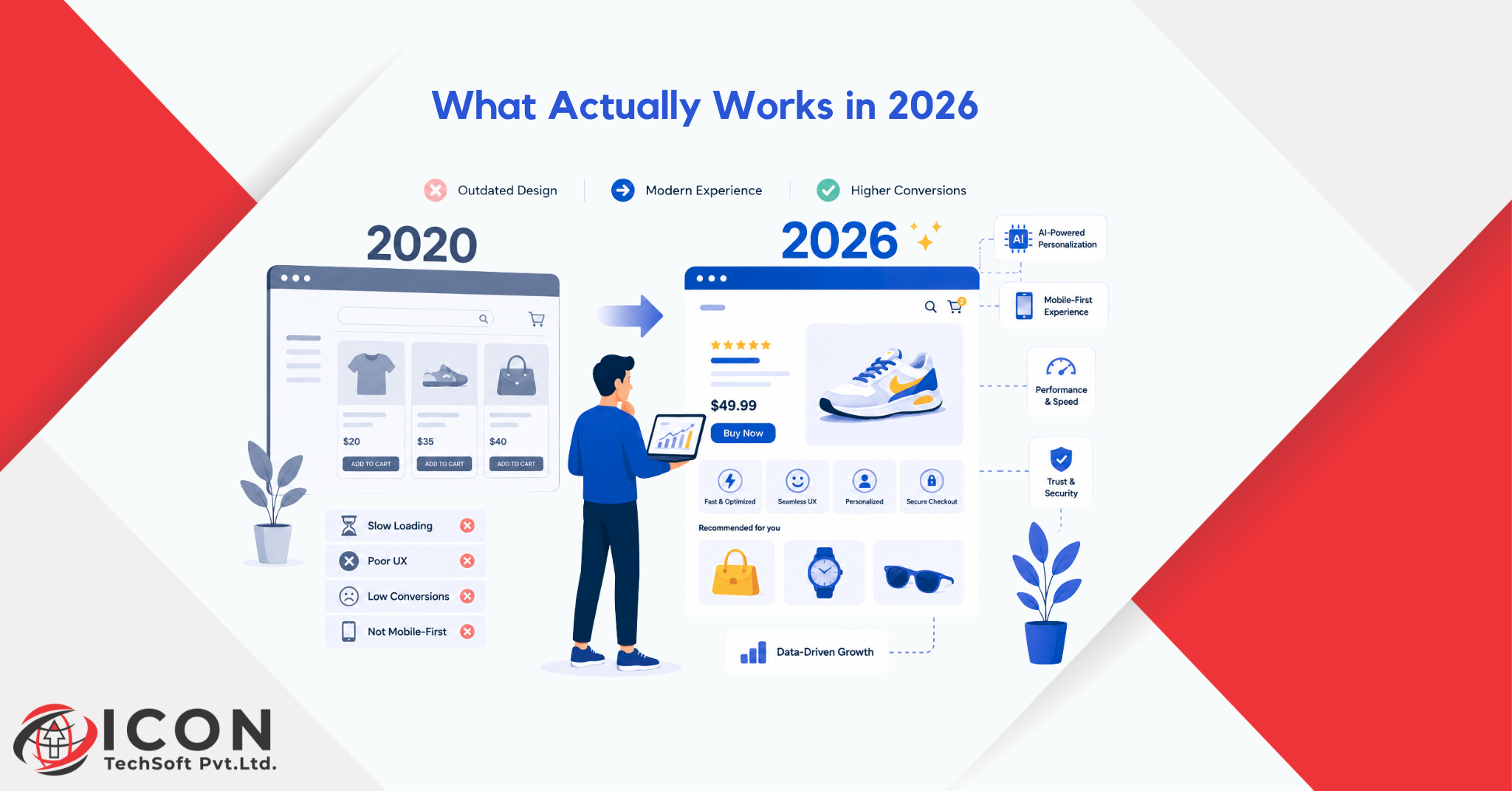
I see it all the time-ecommerce sites that scream “built in a hurry five years ago.” You know the ones: endless scrolling product grids, popups begging for emails, and designs ripped straight from templates. These old-school ecommerce strategies? They’re toast. Customers aren’t scrolling through digital catalogs anymore; they’re in and out faster than you can say “add to cart.”
Let me paint the picture. Last week, I audited a client’s site. It had 12 banners on the homepage alone. Bounce rate? 85%. Why? Modern customers in 2026 expect something better. They want sites that load instantly, feel personal, and make buying a no-brainer. Data from my tests shows shoppers decide in under 10 seconds whether to stay or bail.
That “scroll, judge, leave” habit is brutal. Open tab, quick glance, gone. It’s killing conversions left and right. For real online business growth, you gotta wake up. Ditch the brochure vibe. Your ecommerce site needs to match what people crave now: relevance and speed. Ignore this, and you’re handing sales to competitors who get it.
I’ve fixed sites like this for coffee roasters and fashion brands. The turnaround? Night and day. Sales up 40% just by modernizing the basics.
Forget the old days when your site was just a pretty list of products. Top ecommerce players like Ever lane or Glossier run theirs like well-oiled sales machines. Every pixel pulls visitors closer to checkout. I learned this the hard way after my first store flopped-turns out, passive pages don’t pay bills.
What’s the psychology here? Shoppers buy on feelings. Urgency (“Last 2 in stock!”), social proof (“10K sold”), and clear value (“Save 20% today”). High-converting stores nail this. They don’t just show a t-shirt; they show how it’ll fit your weekend vibe.
But here’s the kicker: design alone won’t save you. I see gorgeous sites converting at 1%. Why? No flow, upsells, recovery for leavers. Smart brands use heatmaps to see where eyes go, then tweak. One client added a “Frequently Bought With” section-boom, average order value jumped 25%.
Want to build yours right? Start simple:
Turn your ecommerce site into a closer, not a viewer.
7 Ways to Increase Sales on Your E-commerce Website.
Picture this: You’re on your phone at lunch, hunting sneakers. Site loads… and loads. You close it. Happens to me daily. In 2026, mobile-first shopping is everything-80%+ of traffic. If it takes over three seconds, kiss 50% of visitors goodbye.
Speed optimization isn’t optional for online business growth, it’s oxygen. Google buries slow sites in search. I use PageSpeed Insights religiously. Scores under 80? Red flag.
Sneaky UX mistakes I spot constantly:
My fixes that worked wonders:
One fitness brand I helped went from 5-second loads to 1.5. Conversions? Up 32%. Traffic held steady, but buyers stuck around. Test your site today; it’ll shock you.
Ever land on a homepage that feels like a carnival? Rotating banners, flashing deals, popups everywhere. I do, and I leave. Most do too. Overload kills impulse buys.
A solid website marketing strategy in 2026 is about calm focus. One big image, punchy headline, single button. Whitespace lets products shine. Look at Allbirds-clean, inviting, converts like crazy.
Ditch the junk:
I redesigned a pet store homepage this way. Banners down from 8 to 2. Engagement time doubled, sales followed. Clean wins. Always.
AI isn’t sci-fi anymore-it’s your secret weapon in ecommerce. Personalized recommendations? They lift sales 30-40%. I set one up for a jewelry shop; “Loved this necklace? Try these earrings” printed money.
Chat support via AI handles “What’s your return policy?” 24/7. No human needed. Smart search fixes typos-“blak dress” becomes “black dress” with matches.
Predictive stuff blows minds. “Based on your cart, add this sunscreen?” Customers expect it now, thanks to Amazon. Plugins like Rebuy make it plug-and-play.
Getting started:
My take: AI levels the field for small ecommerce players.
Remember sites showing the same junk to everyone? Dead. Dynamic content rules. New visitor? Hero new arrivals. Repeat? Your faves.
Personalized journeys keep ’em coming back. A skincare brand I worked with swapped generic pages for behavior-based ones-retention up 22%.
How:
Customization isn’t fancy; it’s table stakes for online business growth.
Online buying feels risky. Why trust your store? Most don’t-hence 70% abandonment. Stack proof: Real reviews with photos, “As seen on TikTok,” return guarantees.
UGC crushes it. Customer vids > stock images. Small wins like “Ships in 1 day” or McAfee badges add up to 15-20% lifts.
Pro tip: Yotpo for reviews. One client went from 2% to 4.5% conversion just from this.
Desktop? Cute relic. Mobile is king. Design for thumbs: Fat buttons, vertical swipes, no pinch-zoom nightmares.
Checkout kills: Make it one-screen, with PayPal/Apple Pay. I fixed a mobile cart for a candle shop-abandonment fell 28%.
Common fails:
Real-device test. Emulators lie.
Products sell once; communities sell forever. I love how brands like Liquid Death turn buyers into evangelists.
Email: Not blasts-stories, tips. Abandoned cart flows recover 15%.
Social commerce: TikTok lives, Insta Shops. Contests for UGC.
Growth hacks:
This snowballs your ecommerce empire.
Keywords? Old news. Intent rules. “Best running shoes” wants comparisons, not lists.
AI search (Perplexity, Gemini) scans conversations. Voice: “Affordable jeans for curvy women.”
Traffic tricks:
Search Console is your bible. Free traffic forever.
Flash died. Minimalist shines-think Apple’s store. White space, big product shots, subtle CTAs.
Customers dig it: Feels luxe, loads fast. Examples: Reformation’s grids.
My rule: If it doesn’t sell, cut it.
Nah. Ecommerce website builders like Framer or Webflow let you build pro sites no code.
No-code wins speed/cost. Custom for hyper-scale only.
Picks:
I’ve built $100K/month stores without devs.
Totally. Free website design for small business via Carrd or WordPress.org. Polish with $10 themes.
Smart spends:
Pro without pro prices.
Abandonment sucks. Fix with guest checkouts, live shipping quotes, BNPL like Affirm.
Trends: Crypto wallets, one-tap.
One tweak: Auto-save carts. Saved a client 20% lost sales.
Copying Shopify demos blindly. Your audience differs.
No analytics? Guessing. Side-hustle attitude? Fails.
Wake-up: Test everything.
Experiences over products. AR try-ons, sub boxes, eco-stories.
Steal: First-party data, omnichannel, fun unboxings.
They’re winning big.
A. Hell yes-adapt and thrive.
A. Shopify, hands down.
A. Make or break.
A. Niche + smart plays = yes.
A. AI, social, sustainability.
A. Speed, trust, personalize.
A. Starts strong, scales up.
A. Customer obsession.
2026 is ecommerce’s pivot year. Adapt or fade-AI, mobile, communities lead.
Shift your mindset: Experiences first. Your future-proof store starts now. Go build it.